Nobody Warns You About ISF 10+2. Then It Costs You $5,000.
There’s a filing in international shipping called ISF 10+2. It is about as exciting as its name, it comes down to a handful of fields, and if you ignore it or fumble it, U.S. Customs can hit you for thousands of dollars and park your cargo on a dock until you sort it out. I spent years running import operations, a lot of it during the COVID supply-chain meltdown, and ISF is one of those quiet things that separates people who actually know shipping from people who think the hard part is finding a supplier.
So here’s the human version, the one I wish someone had handed me early.
What ISF 10+2 actually is
ISF stands for Importer Security Filing. The “10+2” is just a count: ten pieces of information you, the importer, have to give Customs, plus two more that come from the ocean carrier. That’s the whole riddle of the name.
It only applies to ocean freight. If your goods are flying in, ISF doesn’t touch you. The moment they’re going in a container on a ship headed for a U.S. port, it does. There are carve-outs at the edges: bulk cargo, the loose-in-the-hold stuff like grain or ore, is exempt, and qualifying break-bulk cargo plays by different timing rules. If you’re importing containerized goods, which is most people reading this, ISF is your problem.
The ten elements are mostly the unglamorous facts of your shipment. Who manufactured the goods. Who sold them and who’s buying them. Where the container got stuffed. Country of origin. The importer of record number, the consignee, the HTS code for what’s inside. None of it is hard on its own. The catch is the deadline.
The part that bites
Here’s the timing, and it’s worth getting exactly right because I’ve watched people learn it from a penalty notice. Per CBP, eight of the ten importer elements have to be filed at least 24 hours before your cargo is loaded onto the vessel at the foreign port. Not before it arrives in the U.S. Before it leaves. The last two elements, the container stuffing location and the consolidator, get more rope: CBP wants them as early as possible, but no later than 24 hours before the ship reaches its first U.S. port.
That before-it-leaves clock is where people get wrecked, because it’s running on the other side of the planet, in a timezone you’re asleep in, against a sailing schedule that can move.
Miss it, file it late, or file it wrong, and Customs can issue liquidated damages of $5,000 per violation, and those claims can stack toward $10,000 on a single shipment. They can also flag your container for a hold or an exam, which is its own special kind of expensive once demurrage and detention start ticking. And here’s the part that surprises people: your customs broker usually does the actual filing, but the legal responsibility for the accuracy sits with you, the importer. The broker is your hands. The liability is yours.
What COVID taught me about it
In normal times ISF is a non-event. You file early, the boat sails, nobody thinks about it.
COVID was not normal times. Sailings got rolled, sometimes more than once. A vessel you were filing against would suddenly not be the vessel anymore. Stuffing locations changed because a port or a warehouse was backed up or shut down. Suppliers were short-staffed and slow to send the details I needed, and every one of those details was a field on a filing with a hard deadline attached. I spent more mornings than I’d like chasing a manufacturer’s address or a corrected container number so an ISF wouldn’t go in late on a shipment whose schedule had already changed twice.
The lesson that stuck wasn’t really about the form. It was that the filing is only as good as how early you get the data, and the data lives with your supplier, not with you.
How to actually get it right
Most of getting ISF right happens upstream, before anything floats.
Get your supplier in the habit of sending shipment details as soon as the booking exists, not when the boat is loading. Half the late filings I’ve seen came from waiting on information someone overseas was sitting on. Build that habit early and most of the pain disappears.
Pick a customs broker or forwarder who actually communicates, and give them clean data the first time. Bad data still produces a filing, it just produces a wrong one, and a wrong ISF is a finable ISF.
Treat 24 hours before loading as your real deadline for the whole filing, even though two of the elements technically have longer. Filing everything at once, early, is simpler than tracking two clocks. If you’re thinking about the arrival date, you’re thinking about the wrong end of the trip.
And own it. Read what your broker submits on your behalf, at least until you trust the rhythm. It’s your number on the line.
The honest version
ISF 10+2 is a small, dull, easy-to-miss filing that can cost you thousands and strand your cargo, and almost all of that risk evaporates if you get your data early and file before the boat moves. It isn’t glamorous. Most of the work that keeps a supply chain from quietly setting money on fire isn’t.
This is the kind of operational detail I spent years living in, the import and logistics side of how I work. If you’re starting to import and ISF is news to you, better to hear it from me now than from a Customs notice later.
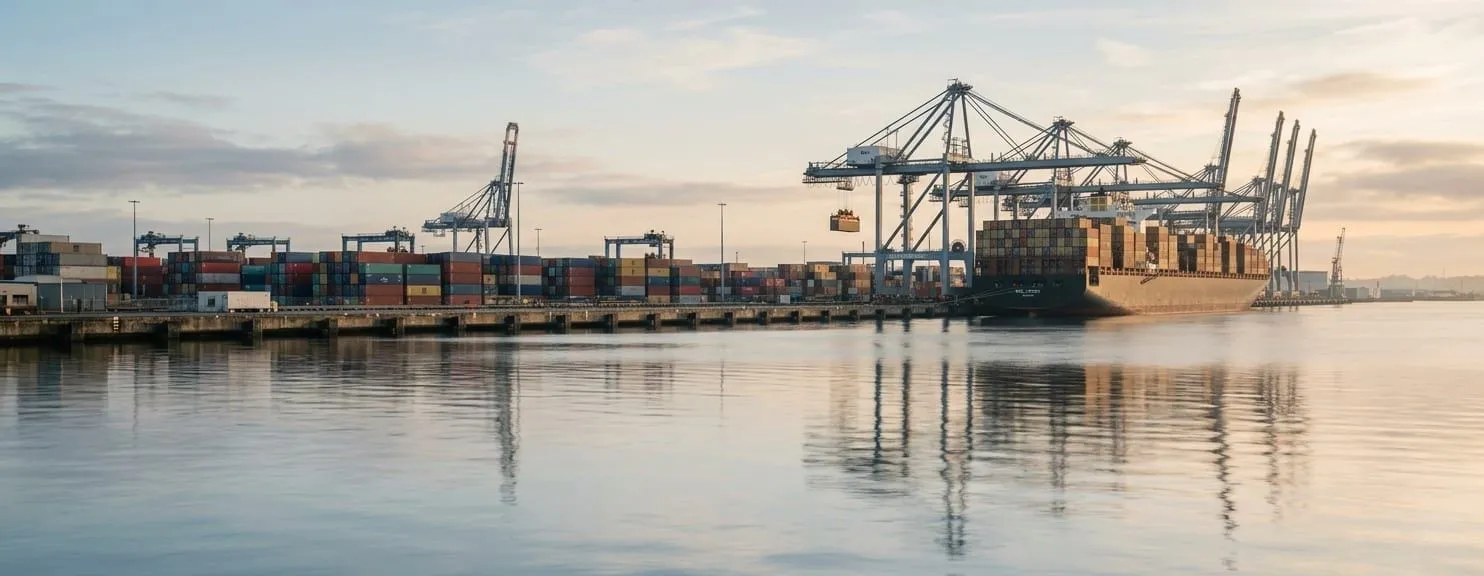
The hero image is an AI-generated illustration of a container terminal, made for this article. No real port is depicted.